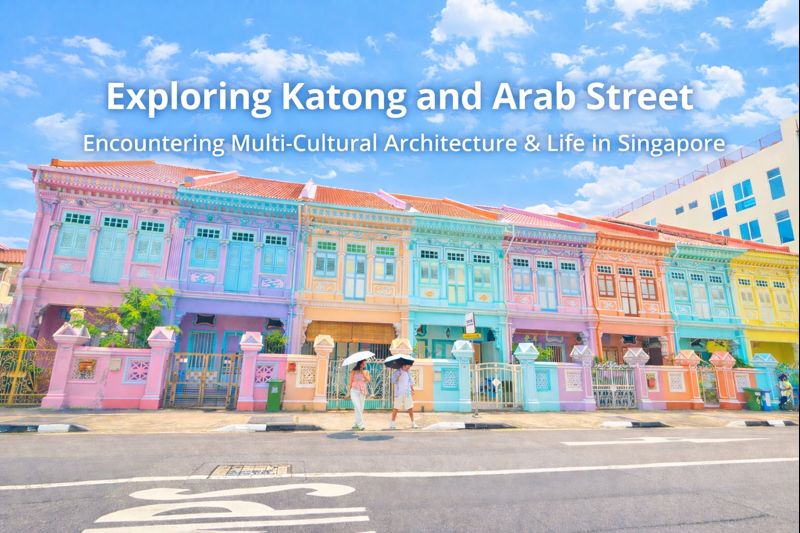
Singapore is often seen as a modern, high-rise city, but walking through neighborhoods like Katong and Arab Streetreveals a very different side of the city—one shaped by history, culture, and thoughtful urban planning.
Katong | Colorful Streets and Harmonious Residential Architecture
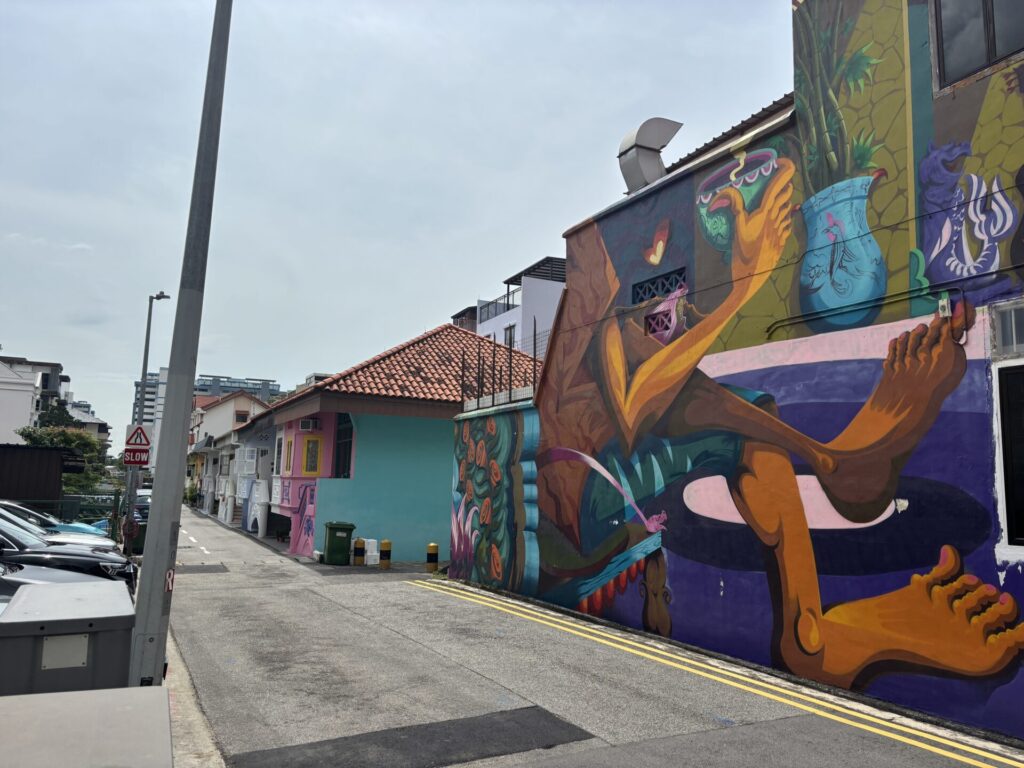
What first caught my attention in Katong was the row of colorful, elevated houses lining the streets.
Soft shades of pink, blue, and mint green stretch on block after block, creating a streetscape that instantly lifts your mood just by walking through it.
Despite the variety of colors, the height and scale of the buildings are carefully aligned, giving the entire area a strong sense of unity. The neighborhood feels calm and well-balanced rather than visually overwhelming.
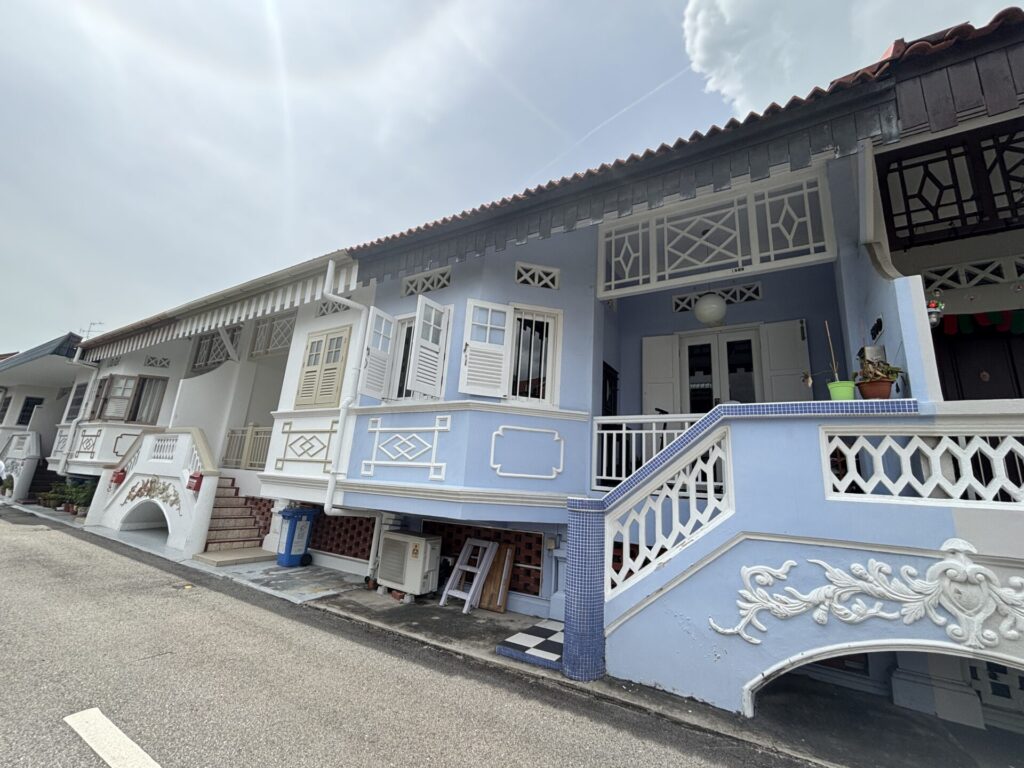
Katong’s Peranakan architecture, which blends Malay, Chinese, and European residential traditions, is not simply decorative. These houses clearly reflect a design philosophy focused on long-term living rather than short-term aesthetics.
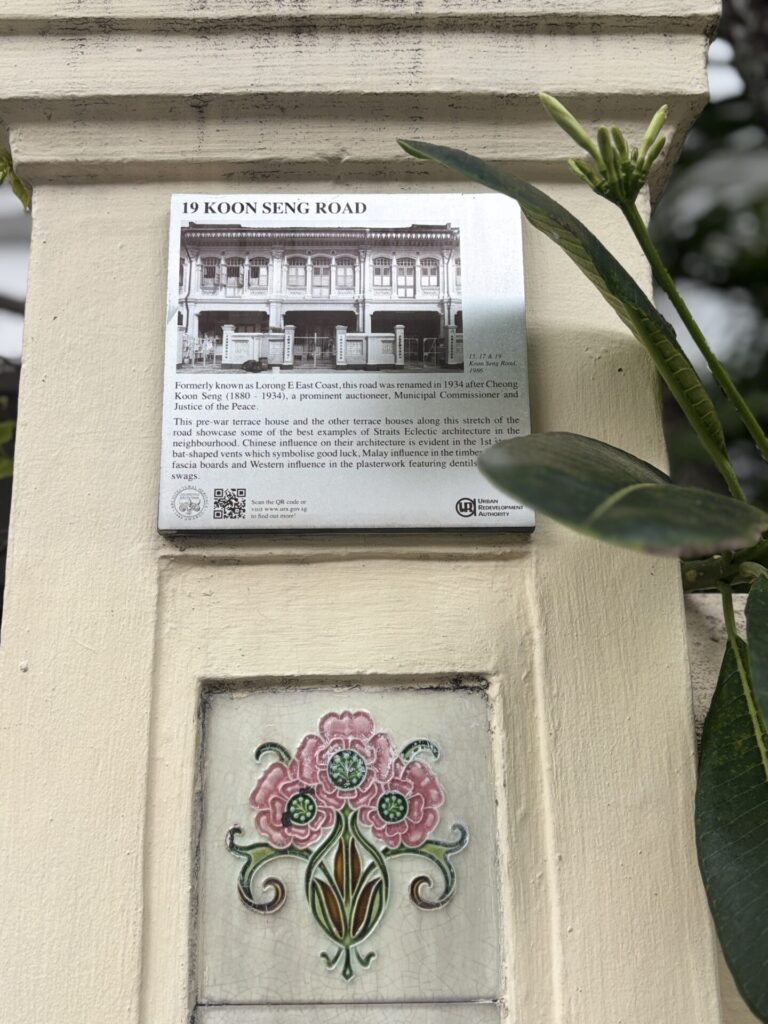
Details reveal this depth:
Chinese-style tile decorations, wooden window frames influenced by Malay architecture, and layouts designed to improve airflow in a hot, humid climate. The closer you look, the more character and craftsmanship you notice.
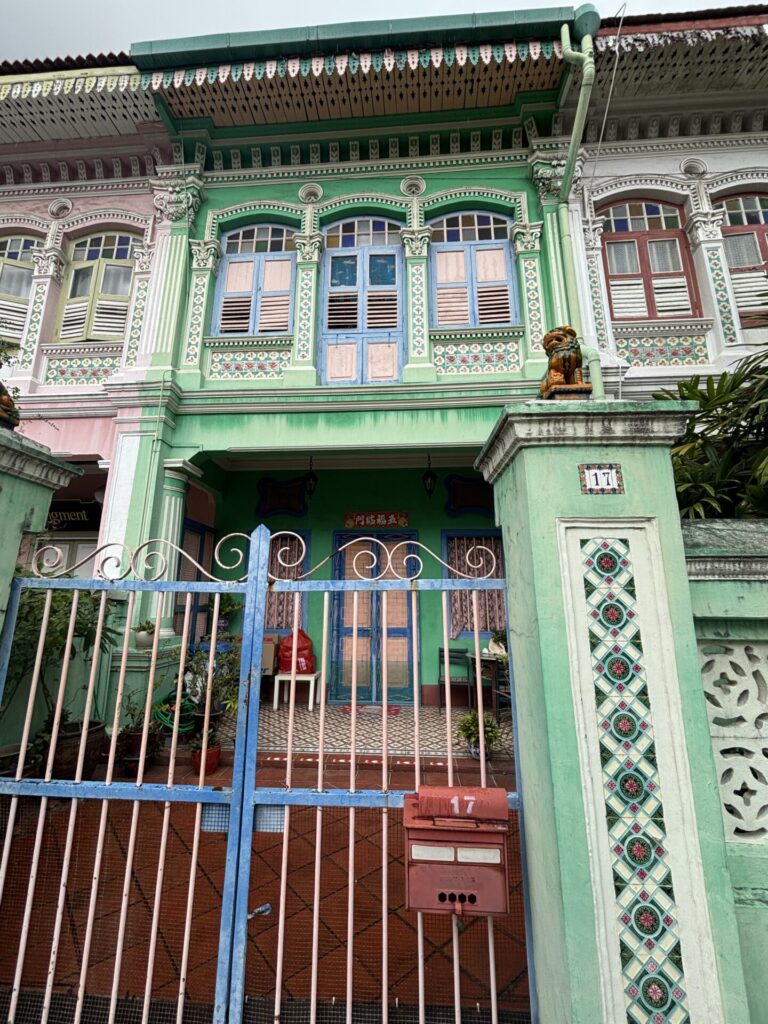
Housing, Greenery, and a Carefully Managed Streetscape
Another striking feature of Katong is the close relationship between homes and greenery.
Plants are naturally incorporated into each residence—around entrances, along fences, and on balconies.
This greenery doesn’t feel ornamental. Instead, it feels like an extension of daily life, softening the streets and contributing to the relaxed atmosphere of the area.
While Katong is primarily a low-rise residential neighborhood, high-density housing is clearly separated and grouped into high-rise apartment complexes elsewhere.
By preserving the low-rise streetscape while accommodating population density in designated zones, the city demonstrates Singapore’s highly planned approach to urban living.
Street width, building height, color palette, and greenery are not treated as isolated elements. They work together as a unified whole, which is likely why the neighborhood feels so comfortable and cohesive.
Arab Street | Where Food, Faith, and Culture Intersect
Arab Street offers a completely different atmosphere.
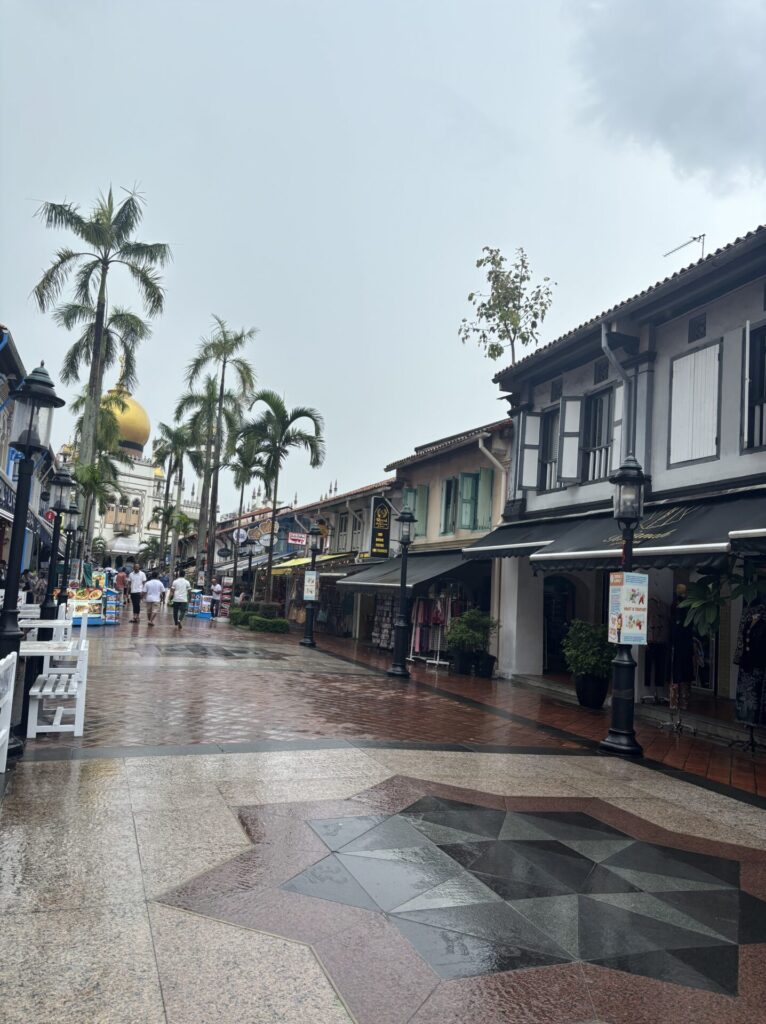
The area is rich with cultural energy, and one thing that stands out immediately is the number of Turkish restaurants and sweet shops. Walking down the street, the sense of being in a different cultural world becomes very strong.
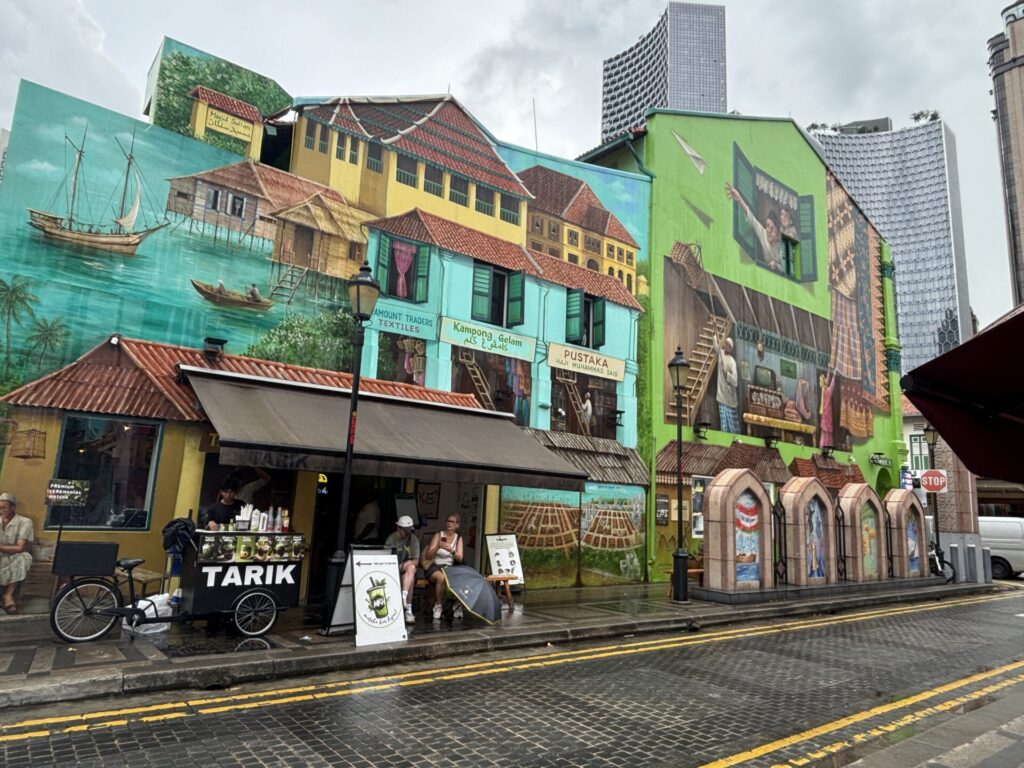
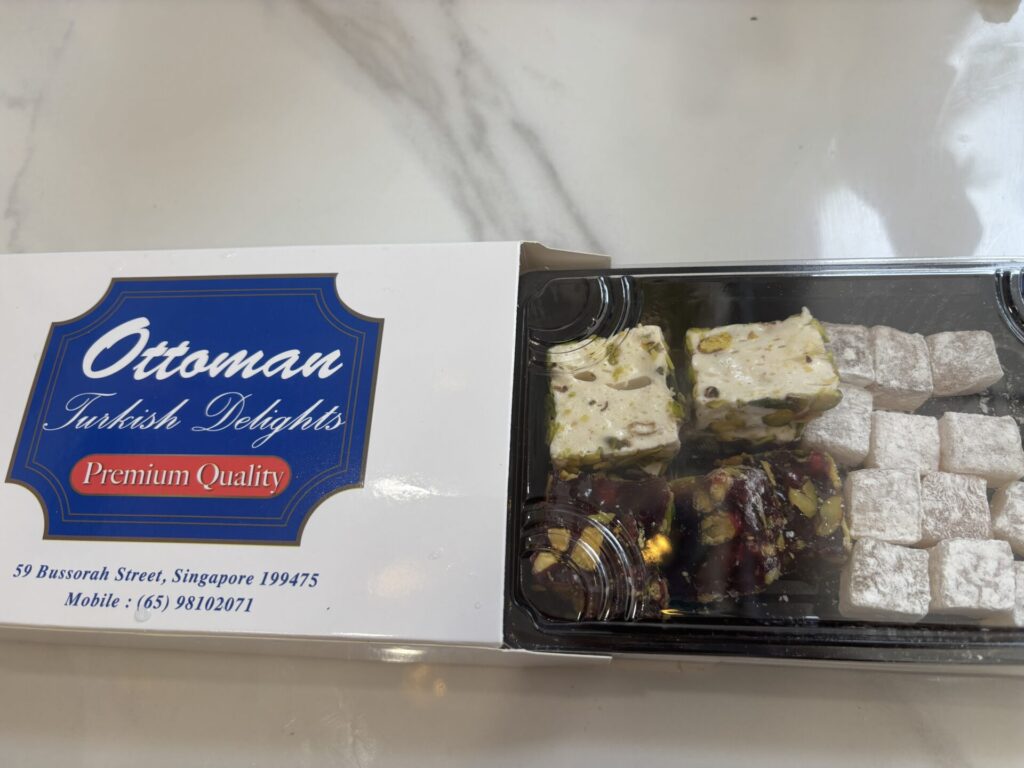
I stopped for a light Turkish meal, and it reminded me of The Chronicles of Narnia, where Edmund is tempted by sweets offered by the White Witch.
In Japan, authentic Turkish sweets are rare, but here they appear naturally, woven into everyday street life rather than presented as something exotic.
A Visit to the Mosque
Nearby, I also visited a mosque where copies of the Qur’an were placed inside.
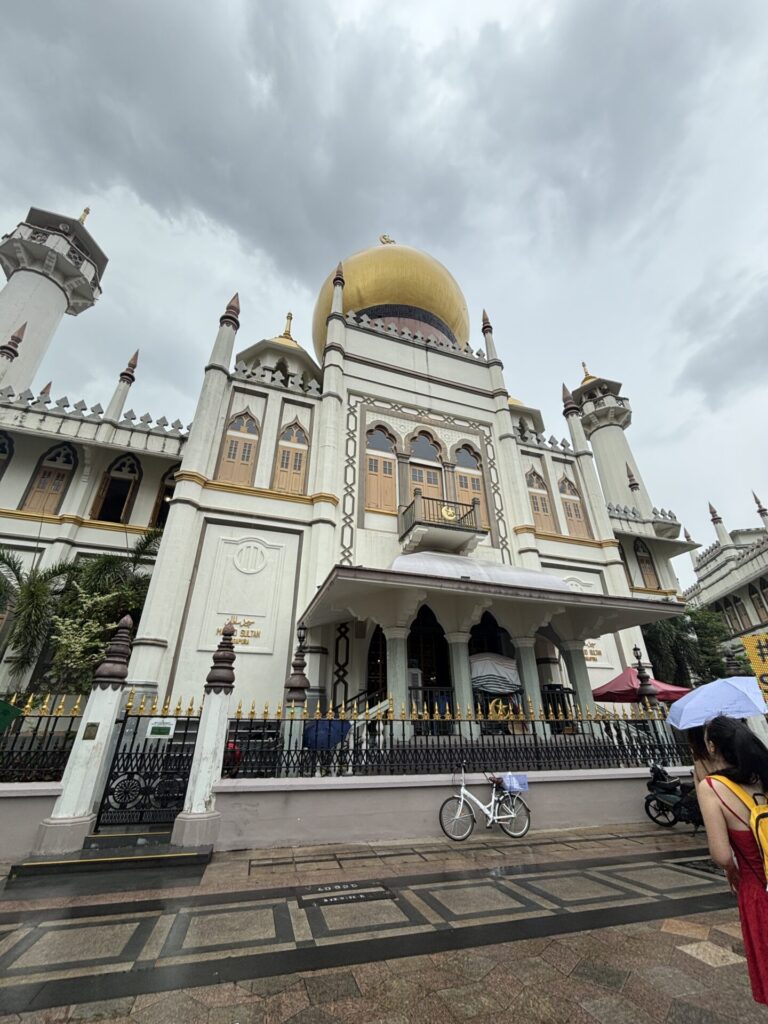
Within the space, only Muslim men were allowed inside a roped-off area to pray, creating a clear boundary between worshippers and visitors.
The atmosphere inside was quiet and tense in a respectful way, emphasizing that this is an active place of faith rather than a tourist attraction.
The clear distinction between areas open to visitors and those reserved for religious practice felt very characteristic of Arab Street.
Walking through the neighborhood, it became clear that religion, culture, and daily life are not preserved as history here—they are actively lived.
A Walk That Reveals Singapore’s Living Diversity
Combining a walk through Katong and Arab Street offers a deeper understanding of Singapore’s diversity.
Katong shows how color, architecture, and greenery can be carefully balanced to create a livable residential environment.
Arab Street demonstrates how food, faith, and cultural identity continue to coexist in the heart of a tourist-friendly area.
Both neighborhoods reward travelers who slow down and walk.
Rather than simply seeing landmarks, you begin to understand how people actually live—and how the city continues to evolve while respecting its roots.


コメント